On Wednesday I'll participate in a debate about Brazil's growing role in Africa at the 7th International Turkish - African Congress in Khartoum (Sudan). Turkey - another emerging power with growing interest in Africa - seems eager to study China's, India's and Brazil's activities there and learn from them. China's role in Africa is now widely scrutinized (the best book on the matter is probably Brautigam's Gift of the Dragon). India's presence in Africa is still a fringe topic, but a growing group of analysts have begun to study India's presence systematically (Mawdsley's and McCann's India in Africa is highly recommendable). Brazil, on the other hand, is the new - and fairly unknown - kid on the block, but its activities in Africa are arousing a growing interest around the world. Considering that Brazil does not need to import energy nor food (important motivating factors for both China and India), what are Brazil's interests in Africa?
Aside from having been united by geography millions of years ago (Brazil and Africa formed the single continent Gondwana, as the shapes of both Brazil's and West Africa's shorelines attest), the transatlantic slave trade (which ended in 1888) created a strong and irreversible cultural connection between Africa and Brazil - more slaves were brought to Brazil than to any other country in the Western Hemisphere, including the United States. While President Fernando Henrique Cardoso (1995-2002) set the stage for diversifying Brazil's partnerships after the end of the Cold War, it was President Lula (2003-2010) who made Africa a strategic priority (as part of grand strategy to strengthen South-South cooperation). While some of his countless trips to Africa may have produced few tangible benefits, they served the larger goal to position Brazil as a leader of the South - and even Lula's critics admit today that Brazil's standing in Africa has received an unprecedented boost. As a recent World Bank -IPEA report points out, Lula made 12 trips to Africa, visiting 21 countries. In the opposite direction, Brazil received 47 visits of African kings, presidents, and prime ministers from 27 nations. Brazil's Foreign Minister Celso Amorim made 67 official visits to 34 African countries during his time with the Lula government. Brazil now has 37 embassies in Africa, up from 17 in 2002.
Yet what can Brazil offer Africa that other emerging actors such as China and India cannot? The first thing that comes to mind is Brazil's expertise in tropical agriculture. Not only is Brazil's agriculture among the most productive in the world, but similar soil and climate conditions have allowed Brazil's Agriculture Research Corporation (EMBRAPA) to help African nations boost agricultural development. In addition, Brazil's innovative social policies (such as Bolsa Familia) have been replicated in seveal African countries. Brazil is not only attractive to Africa in that it is the only BRIC country with a considerable African population, but also because it is the only emerging power that is able to reduce socio-economic inequality at home, thus enhancing social stability.
Brazil: The new China?
The similarities between India's and China's Africa strategies probably outweigh the differences - both driven by, among other issues, their need to secure access to commodities to fuel their rise, and both are keen to use Africa's agriculture to provide food security at home. What about Brazil? South America's emerging giant is often aligned with China and India on important issues such as non-intervention and their refusal to adopt a 'Western approach' that stresses the importance of 'good governance'. Yet, Brazilian companies in Africa have sought to distinguish themselves from their Chinese counterparts - for example by hiring and training local workers. Odebrecht, for example, is Angola's largest private employer, despite many large Chinese firms in the country. Yet while Brazil’s trade with Africa increased between 2000 and 2010 from US$4 billion to US$20 billion, its presence remains much smaller than China's (whose trade with Africa in 2011 exceeded US$110 billion), making meaningful comparisons difficult.
While Brazil's strategy of focusing first on Portuguese-speaking Africa (Angola and Mozambique, among others) is often portrayed as a shrewd idea, it may also be Brazil's greatest weakness as it seemingly reduces companies and the Brazilian government's need to adapt to non-Portuguese speaking countries - and hire staff that speaks English, French and Arabic. When a Brazilian Ambassador recently pointed to language barriers Brazilians faced in countries such as Sudan or Côte d'Ivoire, I could not help but note how little China seemed to care about these limiting factors, having established a major presence in all countries despite significant language barriers and the almost complete lack of cultural ties between Africa and China.
Intertwined with Brazil's growing economic presence in the African continent is its newfound role as an aid donor, yet similar to other emerging donors such as India and China, Brazil seeks to transcend the traditional interaction between donors and recipients and envisions an exchange between 'equal' actors, with mutual benefits and responsibilities. Since 2005, Brazilian development projects are an essential part of the country's Africa strategy. After a brief period of both receiving and sending aid, Northern donors are now ceasing to provide aid to Brazil, suggesting it is no longer seen as a developing country.
Will Brazil (along with India and China) seek to merely change some of the rules – say, dilute conditionalities – of the international aid regime? Or will it seek to undo the most basic organizing principles of today’s development aid regime? Will emerging donors come around to eventually adopting the OECD’s position, or may we, as Ikenberry puts it, “see emerging powers using their newfound status to pursue alternative visions of world order”? When trying to understand whether emerging donors such as Brazil pose a serious challenge to the existing aid regime – a regime they often describe as unfair, outdated and dominated by former colonial powers - the evidence seems inconclusive so far. Brazil is eager to assume more responsibility in institutions such as the World Bank, but it rejects key pillars of the aid regime such as the Paris Declaration on Aid Effectiveness. At the same time, it has signed the Good Humanitarian Donorship Initiative, unlike most 'emerging donors'. More research is necessary to gain a better understanding what Brazil's strategy will be as it emerges as an important player in the global aid (including humanitarian aid) regime.
In the meantime, Brazil must seek to overcome practical obstacles that keep Brazil-Africa ties from prospering. Brazilian investments in Africa are overly focused on mining, oil and gas, and infrastructure, led by a small number of large players, namely Andrade Gutierrez, Camargo Correa, Odebrecht, Petrobras, Queiroz Galvão, and Vale. These companies have direct access to governments and have the capacity to deal with bureaucratic hurdles, whereas small and medium sized firms are kept out.
Logistics also matters: there is only one direct flight connection between Brazil and Africa (between São Paulo and Johannesburg), but most Brazilian travelers en route to Central, West or East Africa must go to Paris, Frankfurt, Istanbul or Dubai first. Yet a direct flight from Lagos to Recife would take no more than 4.5 hours. The government's decision to boost its diplomatic presence in Africa has greatly helped Brazilian companies investing there (a strategy Brazil has strangely failed to pursue in China).
As Brazil's economic presence in Africa grows, the way Africans see Brazil will inevitably change. While its presence is still much smaller than that of India or China, Brazil must be careful to avoid some of the mistakes made by China, which runs the risk of facing a regional backlash. Anecdotal evidence suggests that Brazilians are well-liked across Africa. Now the challenge is to assure that even despite ever greater investments, such as Vale's recently signed US$ 1 billion deal to build a railway in Malawi to transport coal from Mozambique, Brazil will continue to be seen as a partner, and not a new colonizer who merely seeks to exploit Africa's resources.
In break with tradition, Brazil moves to curb Haitian influx

by AFP on Jan 11, 2012
With a booming economy that lures a growing number of foreign workers, Brazil this week moved to curb a growing influx of impoverished Haitians, hardening a previously more permissive immigration stand.
Tuesday, the government said it would grant residence visas to 4,000 undocumented Haitian immigrants already in the country but vowed to crack down on people-smuggling from the desperately poor Caribbean nation.
The decision came in reaction to a large influx of Haitians, many of whom told human rights groups they were abused by traffickers in Peru and Bolivia before being smuggled into Latin America's economic powerhouse.
Analysts said the hardening of the country's traditionally more permissive immigration policy came as a surprise.
"Brazil closes its borders to contain the 'invasion' of Haitians," headlined the daily O Globo.
"It's a new situation for Brazil, which for the first time confronts this influx of people who come to this country because they see its economy as a source of jobs and opportunities," said Oliver Stuenkel, a professor of international relations at the Getulio Vargas Foundation (FGV).
Smuggled by traffickers, the Haitians, whose country was devastating by a deadly earthquake two years ago, are seeking work at the huge hydroelectric projects under construction in the Brazilian Amazon or in Sao Paulo," said Nilson Mourao, the secretary for justice and human rights of the northwestern state of Acre.
"It's the price Brazil is paying for having become the world's sixth largest economy," he added.
Tuesday, authorities also ordered tighter border vigilance and said they planned to raise the illegal immigration with their counterparts in neighboring Peru, Bolivia and Ecuador.
The influx of Haitians, which began in February 2010 shortly after their country was devastated by the quake, has been accelerating in recent days.
Most of the incoming Haitians have been assembling in the towns of Tabatinga and Brasileia in the states of Amazonas and Acre, bordering Peru.
During the decades when Europe, the United States and Japan enjoyed solid economic growth, many Brazilians traveled to these countries in search of work and opportunities.
And Brazil harshly criticized the immigration restrictions then imposed by these countries.
Today Latin America's economic behemoth has become the choice destination for many Europeans, Americans and workers from poor countries.
"We view the immigration policies adopted by some rich countries as unjust," former president Luiz Inacio Lula da Silva said in 2009 as he approved an amnesty that legalized tens of thousands of illegal aliens.
"Brazil always reacted with indignation to the frequently discriminatory treatment of its nationals in the United States and Europe," the daily Folha de S. Paulo noted in its editorial Wednesday. "But now it must prepare itself to receive in an adequate manner the new wave of immigrants."
Brazil makes it difficult for immigrants to secure work permits and residence visas. But until now it turned a blind eye to the arrival of immigrants from poorer countries and periodically granted them amnesties.
"It gives more opportunities to the poor and illegal immigrant than to the legal one to secure resident status or the work permit, the result of a policy based on solidarity with poor countries," said Stuenkel.
But the government's tougher visa policy "will not prevent other Haitians from entering illegally. When that happens, Brazil will again face the dilemma of whether to refuse them entry or expel them," said Salem Nasser, a professor of international law at FGV in Sao Paulo.
Deux ans après le séisme, Haïti poursuit sa reconstruction

Créé le 12/01/2012 à 17h30
La France juge qu'en dépit des difficultés "la situation commence à s'améliorer sur le terrain" en Haïti, deux ans après le séisme qui a ravagé le pays, a déclaré mercredi le ministère des Affaires étrangères. La communauté internationale fait le même constat. Il reste pourtant de nombreux problèmes sur place. Le puissant séisme du 12 janvier 2010, qui a fait plus de 200.000 morts, avait dévasté Port-au-Prince et encombré les rues de la capitale de millions de m3 de débris.
Haïti se reconstruit lentement
Depuis le 12 janvier 2010, Haïti a connu "une longue transition politique" et "l'apparition de nouvelles urgences, comme la menace des ouragans et l'épidémie de choléra". "La situation commence à s'améliorer sur le terrain, en dépit de ces difficultés", a affirmé le porte-parole adjoint du ministère, Romain Nadal.
Au titre de la mobilisation internationale, il a cité le transfert à Haïti de 5,6 milliards de dollars, le déboursement de 2,4 milliards fin 2011 sur les 4,5 milliards promis pour l'aide à la reconstruction et l'ajout de 650 millions additionnels et de 2,6 milliards d'aide humanitaire.
Haïti a bénéficié en outre d'une annulation de dette de 1 milliard de dollars, les deux tiers des personnes réfugiées dans des camps ont pu trouver un logement et la moitié des 10 millions de m3 de gravats ont été déblayés, dont un cinquième recyclé, a précisé le porte-parole.
Pour sa part, la France a décaissé près des trois quarts de son aide bilatérale (326 millions d'euros) et "participe activement aux travaux du comité directeur du Fonds pour la reconstruction d'Haïti (FRH), dont elle est membre", a indiqué Romain Nadal.
Concrètement, elle participe actuellement avec les Etats-Unis à la construction à Port-au-Prince d'un hôpital, à la reconstruction de deux quartiers de la capitale, en coopération avec l'Union européenne, par un renforcement de son action éducative, l'aide à la confection d'un cadastre, la formation de policiers et la relance de projets de développement agricole.
Du côté de l'aide américaine, Mark Feierstein, chargé de l'Amérique latine et des Caraïbes estime avoir apporté une grosse contribution : "L'économie a connu une croissance de 6% l'an passé et l'agence américaine pour le développement y a participé de plusieurs manières". Les Américains ont participé à la mise en place d'une zone industrielle dans le nord du pays.
"Un million et demi de personnes vivaient sous des tentes (juste après le séisme). Ils sont 500.000 aujourd'hui. C'est toujours trop", a regretté le responsable américain.
"La liste des choses qui restent à accomplir est très longue", a-t-il dit, citant les problèmes dans les secteurs du logement, de l'éducation ou de la santé.
Les Etats-Unis continueront à aider Haïti dans les années à venir, a-t-il assuré, notamment en participant" au redressement de l'économie" et "au renforcement des institutions politiques" décapitées par le tremblement de terre.
Le choléra représente toujours un fléau
Haïti a besoin d'investir 1,1 milliard de dollars dans les infrastructures et l'assainissement d'eau pour éradiquer le choléra, responsable de 7.000 décès dans le pays, selon une estimation rendue publique mercredi par l'Organisation panaméricaine de la santé (OPS).
"Nous devons bien sûr maîtriser et réduire la mortalité, mais nous avons la possibilité et l'obligation de garder pour objectif l'élimination du choléra", a déclaré Mirta Roses, directrice de l'OPS, lors d'une réunion au siège de l'organisme à Washington.
L'épidémie qui s'est déclarée fin 2010 en Haïti et dans la République dominicaine voisine constitue un retour inattendu du choléra en Amérique centrale et du Sud, qui avait pourtant éradiqué l'endémie dans les années 1990, a rappelé Mme Roses.
Pour parvenir à l'extinction de cette résurgence, des investissement massifs sont nécessaires dans l'accès à l'eau potable et l'assainissement afin d'aménager "tous les lieux où les gens se réunissent, jouent, travaillent ou vivent", a expliqué Mme Roses.
Sans investissements, "le choléra restera endémique pendant des décennies" comme c'est le cas en Afrique, a averti Kevin de Cock, des Centres américains pour le contrôle et la prévention des maladies (CDC).
L'épidémie est aussi une "bombe à retardement pour tous les Etats des Caraïbes", a prévenu Mme Roses.
En juin, une étude des CDC a conclu que le choléra avait été introduit à Haïti par des Casques bleus népalais stationnés dans le pays.
Le Brésil ferme ses frontières aux immigrants haïtiens
La bonne santé économique du Brésil attire de plus en plus de travailleurs du monde entier, mais le gouvernement vient de décider de fermer sa frontière amazonienne aux immigrants haïtiens, rompant sa tradition de terre d'accueil.
Le géant sud-américain veut freiner l'entrée illégale de milliers d'Haïtiens qui continuent à fuir leur île dévastée par le séisme de janvier 2010, une attitude qu'il avait toujours critiquée auparavant, rappellent des analystes.
Le ministère de la Justice a annoncé mardi que les Haïtiens ne pourront désormais entrer qu'avec un visa de travail émis par l'ambassade du Brésil à Port-au-Prince, la capitale haïtienne. Une centaine de visas seulement seront délivrés chaque mois.
Il a indiqué néanmoins que les 4.000 Haïtiens illégaux déjà présents sur le sol brésilien seraient régularisés.
"C'est une situation nouvelle pour le Brésil qui, pour la première fois, fait face à un flux de personnes qui arrivent dans le pays parce qu'ils y voient une source d'emploi et d'opportunités", explique à l'AFP Olivier Stuenkel, professeur de Relations internationales à la Fondation Getulio Vargas.
La présidente Dilma Rousseff a prévu une visite en Haïti le 1er février pour renforcer la coopération avec ce pays où le Brésil dirige la force de paix de l'ONU, mais le durcissement de la politique d'immigration vis-à-vis des Haïtiens devrait figurer en bonne place dans le menu des discussions.
http://www.eltelegrafo.com.ec/index.php?option=com_zoo&task=item&item_id=26439&Itemid=13
La decisión de regularizar a los haitianos entrados ilegalmente era esperada; pero sorprendió el endurecimiento de la política de inmigración, tradicionalmente más permisiva.
Con una economía pujante que atrae cada vez a más trabajadores del mundo, Brasil decidió esta semana frenar una ola de migración ilegal de haitianos, rompiendo una tradición permisiva que abre la puerta a políticas que antes criticaba de países ricos, indicaron analistas.
El gobierno brasileño anunció el martes que regularizará a los casi 4.000 haitianos que entraron ilegalmente al país, la mayor parte en las últimas semanas, pero impondrá en adelante un visado para el ingreso de estos ciudadanos y pretende bloquear nuevas olas de inmigración ilegal en sus fronteras.
La decisión de regularizar a los haitianos entrados ilegalmente era esperada; pero sorprendió el endurecimiento de la política de inmigración, tradicionalmente más permisiva. “Brasil cierra fronteras para contener 'invasión' de haitianos”, tituló el diario O Globo como noticia principal.
“Es una situación nueva para Brasil, que por primera vez enfrenta esos flujos de personas que vienen al país porque ven en su economía una fuente de empleo y oportunidades”, manifestó Oliver Stuenkel, profesor de Relaciones Internacionales de la Fundación Getulio Vargas (FGV).
Introducidos por “coyotes”, los haitianos que hace dos años vieron a su país sucumbir a un terremoto, buscan trabajo en las gigantes plantas hidroeléctricas en construcción en la amazonía o en Sao Paulo, dijo el secretario de Justicia y
Derechos Humanos del estado Acre, Nilson Mourao, en la pequeña ciudad amazónica de Brasiliea, que acoge a más de 1.000 haitianos.
“Es una consecuencia que Brasil paga por haberse convertido en la sexta economía mundial”, añadió.
Durante décadas de crecimiento económico en Europa, Estados Unidos y Japón, los brasileños viajaron a esos países, a menudo en precarias condiciones en busca de oportunidades de trabajo y el país hizo duras críticas a las restricciones migratorias en esos países.
Ahora es el gigante suramericano el que recibe a europeos, estadounidenses y trabajadores de países pobres. “Consideramos injustas las políticas migratorias adoptadas en algunos países ricos”, criticó el ex presidente Luiz Inacio Lula da Silva al aprobar en 2009 una amnistía que regularizó a decenas de miles de extranjeros irregulares.
“Brasil siempre reaccionó con la debida indignación al trato muchas veces discriminatorio dispensado a sus ciudadanos en Estados Unidos y Europa, pero ahora tendrá que prepararse para recibir de modo adecuado las nuevas olas de inmigrantes”, destacó el diario Folha en su principal editorial de ayer. AFP
Book review: “India in Africa: Changing Geographies of Power” by E. Mawdsley and G. McCann (eds.)

This highly informative collection of essays edited by Emma Mawdsley and Gerard McCann provides the reader with an excellent overview of India's presence in Africa - a topic neglected by most books on Indian foreign policy (with the notable exception of Jacob's and Chandran's India's Foreign Policy- Old Problems, New Challenges, which includes a short chapter on the issue). While the topic of China's growing presence in Africa has long reached the mainstream media, India's role is largely unknown outside of a small but growing circle of specialists. As the editors recognize in the introduction, "China is certainly a more potent player in most African countries and sectors than India at present, so in part this very uneven interest simply responded to an accurate assessment of their relative material powers and impacts" - at the same time, India's influence in Africa is set to increase and it holds valuable lessons for other emerging powers active in Africa, namely Brazil and Turkey.
What the authors make clear early on in the book is that while international observers have a negative bias when analyzing China's role in Africa, India is often portrayed as overly positive - for example, China was roundly criticized and shamed publicly for its 'irresponsible hydrocarbon investments' in Sudan, but few realized that India - behaving just like China - was not subject to the same scrutiny. As Sanusha Naidu writes in chapter 3, India is comfortable operating in China' s shadow, although it is unclear for how long India can escape the criticism for such controversial moves such as large-scale farm acquisitions and subsequent near duty-free food exports of crops to India.
Is India's role comparable to that of China? Are China and India engaged in a new version of the 'scramble for Africa'? In Chapter 1, Fantu Cheru and Cyril Obi argue that contrary to official Indian rhetoric, India's and China's interests in Africa are simply too similar to avoid competition. They say that
It is important to note that when stripped of its rhetoric, it is hard to ignore the similarities between the African strategies of India and China, which is found in ‘their demands for resource security, trade and investment opportunities, forging of strategic partnerships, African–Asian solidarity and South–South solidarity’.
Instead, what differentiates India's role in Africa is its smaller dimension, later entry and, due to financial constraints, the necessity to engage with economic blocs such as ECOWAS (rather than governments) and to bet on a more dynamic private sector to strengthen India's presence. This does not mean that trade is the only driver of India's engagement - as the authors point out, particularly the East African coast is of great strategic importance as India seeks to build a visible presence in the Indian Ocean, and the Indian navy regularly conducts naval patrols off Mozambique's coast.
While the common assertion that China's presence in Africa follows a centrally planned master plan designed in Beijing is not correct (as Deborah Brautigam points out in her excellent book on China's presence in Africa), it is true that India's engagement with Africa seems more uncoordinated that China's. In a way, this is unsurprising, as India's "private-sector driven, unplanned, polarizing and chaotic model of economic development" is, quite naturally, in evidence in Indian economic relations with Africa.
In Chapter 2, Pádraig Carmody correctly notes that Africa has a much greater strategic importance for India than for China, particularly regarding energy. India possesses less than 0.5% of the world's proven oil reserves, and it is expected to run out of coal over the next decades, which will force it to import virtually all of its energy - and in order not to become overly independent on a perennially unstable Middle East, India, soon the world's third-largest energy consumer, will increasingly import African oil.
As there are more poor people in India than in all of Africa combined, and as Africa's average GDP is $200 higher than that in India, the motivation for India's increasing aid payments can be better explained by economic and political motivations rather than by humanitarian ideals - aid is seen as a tool to boost India's soft power and reduce Africans' fear that India is primarily interested in exploiting Africa's resources. At the same time, Africa's support for India's campaign for a permanent UN Security Council Seat is indispensable, even though the clear date for the next attempt to bring about reform has not been set.
Chapter 6 by Gerard McCann is particularly enlightening as it questions the common wisdom that India's historic diaspora in East Africa provides Indian companies with a competitive advantage. He even argues that in a highly ethnicized political economy like Kenya's, the long presence of Indians would pose obstacles to the arrival of the new generation of Indian companies, like Bharti Airtel, writing that "it seems that laudatory rhetoric about historical friendship, at times, obscures tensions between various African and Indian actors." And he shows that African-Indian relations have by no means been problem-free - in 1962, for example, Kenya's political leadership openly supported China during the Sino-Indian War, despite the presence of the Indian community in Kenya. In the 1990s, the high profile complicity of Indians in Moi's kleptocratic regime compounded prejudice in Kenya against the Indian community.
Chapter 9 by Luke Patey details India's OVL's entry into Sudan, benefitting from Western oil firms' decision to exit the country due to growing insecurity and international pressure from human rights organizations. What is particularly interesting here is that the Indian government (which owns much of OVL) was much less concerned about human rights abuses then about losing its investment due to the unpredictable political situation in Sudan.
In Chapter 10, Emma Mawdsley analyzes the theoretical and philosophical underpinnings of aid, comparing 'traditional Western aid' to 'South-South cooperation' - while such a distinction is difficult to make in the real world (as the author acknowledges), this chapter is useful for academics (rather than policy makers). She concludes that
Southern donors actively attempt to avoid this discursive positioning (of donor vs. recipient) of their development cooperation: something that many western donors could learn from. But just like western donors, southern development partners are in pursuit of their own interests, and their symbolic claims should be equally subject to critical evaluation as those of the western donors.
The authors frequently note how limited our knowledge of India's role in Africa is- effectively complicating the Indian government's capacity to pursue an informed Africa policy. From a Brazilian point of view, such arguments should cause alarm bells to ring, for Brazil possesses virtually no systematic knowledge at all about the role it plays in Africa. In order not to make avoidable mistakes (that China has made by sometimes appearing like a threat to Africa), Brazilian academics must undertake a greater effort not only to provide big-picture analyses, but to spend time on the ground and collect meaningful and measureable data. For Brazil, Africa will soon be about much more than business opportunities, South-South solidarity and the collection of support in the UN General Assembly for a permanent seat in the UN Security Council. As Alex Vines points out in Chapter 11, Africa will be of great strategic importance - this is particularly true once the new generation of large container ships can no longer pass through the Suez Canal, and need to take the route around the Cape of Good Hope - an area where Brazil will have to exert control if it seeks to position itself as a global power.
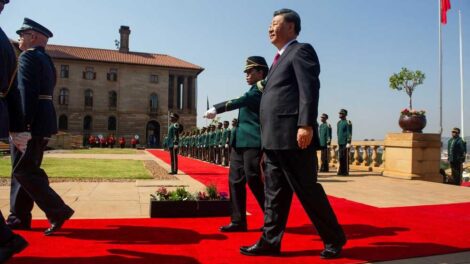
The book is thus extremely useful for those seeking to gain a better understanding of India's presence in Africa. Brazilian Africa scholars could equally benefit from it. Brazil is trailing both China and India in Africa, but if it studies China's and India's role in Africa carefully, it can avoid their mistakes and engage Africa more effectively. Otherwise, the red carpet rolled out to welcome Brazil to the continent, "will quickly be rolled up and taken away."
France Presse
11/01/2012 - 18:13
Por Yana Marull
Com uma economia vigorosa que atrai cada vez mais trabalhadores do mundo, o Brasil decidiu nesta semana frear uma onda de imigração ilegal de haitianos, rompendo uma tradição permissiva que abre as portas para políticas que antes criticava em países ricos, indicaram analistas.
O governo brasileiro anunciou nesta terça-feira que regularizará os quase 4 mil haitianos que entraram ilegalmente no país, a maior parte nas últimas semanas, mas irá impor a partir de agora um visto para a entrada destes cidadãos e pretende bloquear novas ondas de imigração ilegal em suas fronteiras.
A decisão de regularizar os haitianos que entraram ilegalmente era esperada, mas o endurecimento da política de imigração, tradicionalmente mais permissiva, surpreendeu.
"É uma situação nova para o Brasil, que, pela primeira vez, enfrenta estes fluxos de pessoas que vêm ao país porque veem em sua economia uma fonte de emprego e oportunidades", afirmou à AFP Oliver Stuenkel, professor de Relações Internacionais da Fundação Getúlio Vargas (FGV).
Introduzidos por "coiotes", os haitianos, que há dois anos viram seu país sucumbir a um terremoto, buscam trabalho nas grandes usinas hidroelétricas em construção na Amazônia ou em São Paulo, disse à AFP o secretário de Justiça e Direitos Humanos do estado do Acre, Nilson Mourão, na pequena cidade amazônica de Brasileia, que acolhe mais de mil haitianos.
"É uma consequência que o Brasil paga por ter se tornado a sexta maior economia mundial", acrescentou.
Durante décadas de crescimento econômico na Europa, nos Estados Unidos e no Japão, os brasileiros viajaram a estes países, frequentemente em condições precárias, em busca de oportunidades de trabalho, e o país fez duras críticas às restrições migratórias nestes países.
Agora é o Brasil que recebe europeus, americanos e trabalhadores de países pobres.
"Consideramos injustas as políticas migratórias adotadas em alguns países ricos", criticou o ex-presidente Luiz Inácio Lula da Silva ao aprovar, em 2009, uma anistia que regularizou dezenas de milhares de estrangeiros em situação ilegal.
"O Brasil sempre reagiu com a devida indignação ao trato muitas vezes discriminatório dispensado aos seus cidadãos nos Estados Unidos e na Europa", mas agora terá que "se preparar para receber de modo adequado as novas ondas de imigrantes", destacou o jornal Folha em seu principal editorial nesta quarta-feira.
O Brasil não é um país fácil para conseguir permissão de trabalho e residência. No entanto, fez vista grossa à entrada de imigrantes de países mais pobres e aprovou anistias periódicas.
"São dadas mais oportunidades ao imigrante ilegal e pobre que ao legal para obter o status de residente e visto de trabalho, fruto de uma política baseada na solidariedade com os países pobres", explica Stuenkel, para quem o país, impedido de controlar suas gigantescas fronteiras, enfrenta um "difícil dilema".
"A exigência do visto decidida pelo governo não impedirá que outros haitianos continuem entrando ilegalmente. E, quando isso ocorrer, o Brasil será testado de outro modo, quando tiver que decidir se rejeita sua entrada ou os expulsa", explicou à AFP o professor de Direito Internacional Salem Nasser.
A presidente Dilma Rousseff visitará o Haiti em fevereiro. O Brasil lidera as tropas da ONU neste país desde 2004 e, desde então, promove a cooperação e o desenvolvimento.
© Copyright AFP - Todos os direitos de reprodução e representação reservados
Will Brazil let Haiti’s huddled masses in?

"Brazil fears massive entry of immigrants" wrote Brazil's O Globo, a daily from Rio de Janeiro, in today's edition. In another article, the newspaper announced that Brazil would "seal its borders to contain the 'Haitian invasion'". Illegal immigration is nothing new in Brazil. Whoever walks through downtown São Paulo will notice Bolivian or Asian street vendors, many of whom do not possess a valid visa. The government offers a general amnesty to all illegal immigrants every once in a while - the last one occurred under the Lula administration. Yet while NGOs have long called on the government to provide better assistance to illegal immigrants (a number of whom are underage, do not speak Portuguese, work in slave-like conditions and are scared to contact the police for fear of being deported), the issue never seemed urgent enough to enter the public debate.
It took the recent arrival of roughly 4,000 economic migrants from Haiti in Brazil's Amazon region (bordering Bolivia, Peru, Colombia and Venezuela) to cause a stir in Brazil's media. While local government representatives in Acre, a state bordering Bolivia, early on assured that they'd do whatever possible to help the Haitians (many of whom spend thousandso of dollars to arrive in Brazil), the federal government announced today that while the Haitians already on Brazilian soil would receive a visa, Brazil would not accept any additional undocumented migrants.
Many analysts both in Brazil and abroad criticized the move as overly harsh, arguing that Brazil was adopting a posture similar to those of the EU and the United States - which Brazil has traditionally lambasted for their restrictive immigration policy. Spain's El País today reminded Brazilians of their 'historic debt' to immigrants. Others defended the move, pointing to massive domestic problems Brazil had to solve before being able to receive high numbers of economic migrants.
Those in Brazil who believe this episode to be an exception are profoundly mistaken. While the majority of recent migrants come from Haiti, the hemisphere's poorest country, people from all over the world will seek to benefit from Brazil's economic rise. As Al Jazeera's correspondent Gabriel Elizondo points out in a recent article, he encountered illegal immigrants from as far as Bangladesh during a short walk through a Brazilian bordertown. As the New York Times reported yesterday, immigrants are also arriving in Brazil from Pakistan and India. This clearly shows that stabilizing Haiti will do little to reduce the numbers of economic migrants coming to Brazil - quite to the contrary: as Brazil grows richer, more people will come, no matter what the situation in Haiti is like.
The second fallacy is to believe immigrants will return to their home country once their temporary work permits expire (Brazil's government announced it would give 5-year work visa's to all Haitians on Brazilian soil). It took Germany decades to realize that many of its 'guest workers' from Southern Europe and Turkey would simply stay on. Looking back, it is hard to believe how the German government could have been so foolish to overlook obvious questions: Would guest workers' children born in Germany obtain German citizenship? Given that they did not speak German at home, would public schools offer extra courses to help immigrants' children catch up? Would guest workers' extended families be allowed to settle in Germany as well? As I have argued in a post last year, Brazil's society would be well-advised to debate these questions now in order to avoid the glaring mistakes several European countries committed over the past decades.
The third delusion is that boarder controls will have a lasting impact on the number of illegal immigrants. If despair is great enough at home, immigrants are known to assume great risks and assume great costs to make it to the land of opportunity. Tougher policing will merely drive up the price traffickers charge, and it will increase the number of immigrants who die on their way to Brazil as they seek to avoid controls. As The Economist noted in 2001, a first step would be
to admit that there are compelling moral and economic arguments why more people from poor countries should be allowed to move to rich ones. The world has made the movement of goods, money and ideas freer, but not, strangely, the movement of people. It is both right to give desperate people sanctuary and rewarding to welcome new citizens. History has shown that immigrants bring ideas, vigour and ambition, as well as their mere labour (...) Immigrants create jobs as well as filling them; they add to overall economic activity.
At the same time, it is understandable that Brazil's government has decided to take a restrictive stance for now, seeking to temporarily control the influx of migrants. This is likely to provide respite, however ephemeral, to think hard about the challenges immigration is set to pose for Brazilian society.
To end on a positive note, the fact that so many individuals from around the world take immense risks to come to here should make Brazilians feel proud. Here are some of the things the Haitians said:
“Then we finally got to Brazil, which I’m told is building everything, stadiums, dams, roads,” (New York Times)
"We came to Brazil, which helps us and which treats us as if we were Brazilians. The Brazilians have done a lot for our country." (O Globo)
“All I want is work, and Brazil, thank God, has jobs for us.” (New York Times)
“I want to go straight to São Paulo, the New York of South America.” (New York Times)
“Brazil’s a rising kind of place, and it needs people like me.” (New York Times)

Global Times | January 09, 2012 21:23
By Xu Ming
http://www.globaltimes.cn/NEWS/tabid/99/ID/691432/BRIC-nations-set-to-take-bigger-global-role.aspx
Last year was a big one for the BRIC group of developing nations, Brazil, Russia, India, and China. South Africa was added to the group. China became the world's second biggest economy, Russia won WTO membership and Brazil replaced the UK as the sixth biggest economy. But there is much uncertainty about the BRIC economies. Is their growth sustainable? How can they play a bigger role in the international stage? Global Times reporter (GT) Xu Ming talked to Oliver Stuenkel (Stuenkel), assistant professor of international relations at the Getúlio Vargas Foundation in São Paulo, on these issues.
GT: Some economists are skeptical about the reality of Brazil overtaking the UK, seeing it as a product of the appreciating real. Is the growth sustainable?
Stuenkel: Brazil's growth is far more sustainable than it was in the past, when the government struggled to keep inflation low and control public spending. At the same time, challenges loom. While growing trade with China has had positive effects on Brazil's economy, there are now growing worries about the risks of deindustrialization in Brazil.
While the government called for protectionist measures, the true problem lies with Brazil's low productivity, complex bureaucracy and limited ability to innovate. Despite these difficulties, Brazil's economy can be expected to continue to grow faster than Europe's economies, and Brazil may overtake France by the middle of the decade.
GT: How do you see the overall achievements of the BRIC economies since Jim O'Neill coined the concept in 2001?
Stuenkel: Their development has far exceeded O'Neill's expectations. In one of his first reports, he predicted that Brazil's economy would overtake that of the UK by 2036, yet this took place already last month. The year when China will overtake the US was regarded as far off in the future, yet now most analysts agree that it will take place before 2020. The BRIC's decision to meet regularly and consult was derided at first by Western analysts, but now BRIC is no longer only an economic, but also a political concept.
GT: Some are doubtful about the BRIC economies' future. Will the growth of the last decade be sustained?
Stuenkel: China's spectacular growth over the past decades may slow down somewhat, but I still expect China to grow by 7.5 percent per year. If the Brazilian government is able to implement tax and labor reforms and maintain low inflation, it will continue to grow, though not as fast as China.
The situation in India seems worrisome as the political deadlock makes meaningful reform very difficult, and inflation is on the rise. While I believed, over the past years, that India's growth would outpace China's, the recent political events in India dampen the positive outlook somewhat.
Russia is the most difficult to predict and its economy is strongly dependent on commodities, namely oil and gas. Russia's capacity to innovate is low.
GT: How can the BRIC nations work better together?
Stuenkel: China is now a major presence in all the other BRIC nations. The challenge is to boost trade between the other members. Trade between India and Brazil, for example, is very low, as these countries do not know each other very well.
There is no question that the BRIC alliance is highly diverse, and that the concept may very well fail to make its mark, yet the internal differences should not overshadow the unique opportunity emerging powers have to use the BRIC summits as a vehicle to turn into international agenda setters.
If the BRIC were able to take a constructive position on any of the great challenges the world is facing today such as nuclear proliferation, trade, the Middle East or climate change, they would immediately turn into the powerful voice in international affairs, seriously challenging the monopoly the West still holds in the global discourse.
GT: How else will the BRIC affect the world?
Stuenkel: With a shift of economic power, the distribution of political power also changes. The emerging countries will cease to represent the periphery of the global economy and the political debate, so we'll have to look at the world in an entirely different way. Global governance structures are beginning to adapt to this momentous shift.
Consumer patterns in China, India and Brazil will increasingly affect how companies design and market their products. Immigration patterns will change, and a growing number of workers from Europe and the US will be drawn to emerging markets as they offer greater opportunities.
![]()
January 6, 2012
By WILLIAM NEUMAN and SIMON ROMERO
When President Mahmoud Ahmadinejad of Iran begins a four-nation tour of Latin America on Sunday, showcasing his support in the region against a backdrop of international tensions over his nation’s nuclear program, he is set to visit some of the United States’ most ardent critics: Venezuela, Nicaragua, Cuba and Ecuador.
But the list of countries Mr. Ahmadinejad will not be visiting is equally telling.
Though Iran is reeling from successive rounds of international and unilateral sanctions, Mr. Ahmadinejad is not visiting Brazil, the region’s economic powerhouse. Nor is he going to other large countries like Mexico, Colombia and Argentina, underscoring that his visit is limited to nations without extensive influence or the capacity to offer much of a major economic partnership.
“If Iran is intent on spreading its political influence, it will not find a hospitable environment in Latin America,” said Michael Shifter, president of the Inter-American Dialogue. “Most governments may want more breathing space from Washington, but they are not looking to be aligned strategically with Tehran.”
The trip, Mr. Ahmadinejad’s sixth official visit to the region since becoming president in 2005, seems intended as a counterstrike against Iran’s increasing international isolation. But his previous trips have not always gone smoothly; his one visit to Brazil, in 2009, was met with protests.
“Dealing with Iran has been nettlesome for Brazil,” said Stephen C. Johnson, director of the Americas program at the Center for Strategic and International Studies. “There’s not a lot of enthusiasm for welcoming Iran’s president at this time, particularly as sanctions begin to tighten and there are continuing indications that Iran is developing a nuclear weapon.”
When Brazil’s previous president, Luiz Inácio Lula da Silva, went to Tehran in 2010 to help negotiate a deal for Iran to exchange uranium, he stirred up a hornet’s nest of criticism that Mr. Ahmadinejad had used him to try to derail United Nations sanctions against Iran. It was widely interpreted as a blot on Mr. da Silva’s otherwise enviable legacy, causing the kind of friction with Washington that Brazil’s current president, Dilma Rousseff, might try to avoid.
“I’m not sure if Dilma wants to cause a big uproar at this point,” said Oliver Stuenkel, a professor of international relations at the Getulio Vargas Foundation in São Paulo.
Iran remains an important trading partner for Brazil, passing Russia last year as the top export market for Brazilian beef. It is also a large buyer of Brazilian sugar and soybeans.
But the relationship is asymmetrical and may be more important to Iran. In 2010, Brazil was Iran’s 10th largest trading partner, ranked by the value of goods exchanged, according to data compiled by the European Union’s directorate general for trade. But Iran ranked 27th among Brazil’s trading partners.
As for Iran’s trade with some other countries in the region, including Ecuador, it has grown considerably in a short time, but still remains relatively small.
President Hugo Chávez of Venezuela is Mr. Ahmadinejad’s most vociferous ally in the region, but Iran ranks 42nd on the list of Venezuela’s trading partners, accounting for less than 0.1 percent of Venezuela’s total imports and exports, according to the European Commission data.
With the international sparring over Iran’s nuclear program escalating, the visit gives Mr. Ahmadinejad the chance to glad hand with leaders from other countries who have shown sympathy and solidarity. He will attend the inauguration of President Daniel Ortega of Nicaragua on Tuesday.
The visit also brings benefits for Mr. Ahmadinejad’s hosts, giving them the opportunity to thumb their noses at the United States in front of their own political constituents.
“You shore up your base,” Mr. Johnson said of the impact of the visit for leaders like Mr. Chávez in Venezuela. “You enhance your standing as an actor on the global stage.”
Elsa Cardozo, a professor of international studies at the Central University of Venezuela, said the Iranian president’s visit gave Mr. Chávez a chance to strike a combative pose as he embarks on a nearly yearlong re-election campaign, allowing him to “project his own style and radical message.”
“His core supporters are very radical and he doesn’t want to lose them,” Ms. Cardozo said.
Last month, President Obama addressed the Venezuela-Iran relationship in written responses to questions from El Universal, a newspaper in Caracas.
“Ultimately, it is up to the Venezuelan people to determine what they gain from a relationship with a country that violates universal human rights and is isolated from much of the world,” Mr. Obama said. “Here in the Americas, we take Iranian activities, including in Venezuela, very seriously.”
Mr. Chávez responded by lambasting Mr. Obama, calling him a fraud and an embarrassment and telling him to mind his own business.
Iran appears eager to exploit seams in hemispheric relations at a time that the United States’ sway has diminished. The Organization of American States, a traditional mechanism for Washington to project its influence, was weakened last year when Brazil delayed its annual $6.5 million payment to the body. The dispute arose after the organization’s human rights commission called on Brazil to suspend construction of its Belo Monte dam complex in the Amazon River basin.
Countries in the region are also seeking new alliances to counterbalance the traditional weight of the United States. A meeting of heads of state from Latin America and the Caribbean, including Cuba, which is excluded from the O.A.S., was held in Caracas in December. The United States was not invited.
The regional dynamic has also shifted as other major countries, particularly China, make large investments and take an increasing role in trade.
In that context, Iran is a minor player but one that can be particularly problematic. Iran appears to have used its relations with some Latin American countries to try to circumvent international sanctions on its financial operations.
In 2008, the United States imposed sanctions aimed at shutting down a Venezuelan-based bank that it said was operating closely with an Iranian bank that helped finance Iran’s weapons development program.
That was followed by efforts to establish ties between a sanctioned Iranian bank and the Central Bank of Ecuador, according to news reports in that country and State Department cables revealed through WikiLeaks.
And last May, the United States sanctioned Venezuela’s state-owned oil company, Petróleos de Venezuela, for shipping a gasoline blending component to Iran. The sanctions barred the state oil company from doing some business with the United States government but it did not affect Venezuelan oil exports to the United States.
Iran’s ties in the region have often resulted in announcements of joint economic initiatives, like the establishment of development funds, construction of car or tractor factories in countries like Venezuela or Bolivia, or a port project in Nicaragua. But the projects have either failed to materialize or offered little in the way of real economic activity.
Douglas C. Farah, a senior fellow of the International Assessment and Strategy Center, a national security research group in Alexandria, Va., said such financial relationships were easily manipulated.
“It gives them a chance to get into countries to buy much needed equipment and ways to get into financial systems that will allow them, unsanctioned, to move their money around the world,” Mr. Farah said.
William Neuman reported from New York, and Simon Romero from Rio. María Eugenia Díaz contributed reporting from Caracas, Venezuela.
Book review: “Temptations of the West: How to be modern in India, Pakistan and beyond” by Pankaj Mishra

Any book dealing with the concept of the West faces a difficulty because the West is a highly intangible construction that changes shape along with the shifts of geopolitics. For example, while Europe was historically seen as the embodiment of the West (which then had a mostly religious-historical connotation), the rise of the United States profoundly affected the concept - this became particularly visible during the Cold War, when the center of the West migrated to the United States. In the bipolar world, the concept of the West suddenly had an ideological connotation, representing the free, democratic and capitalist world.
This was highly misleading: Far from being anti-western, communism was a very much western idea. Stalinism and Maoism are not versions of oriental despotism - as many Western and non-Western scholars and policy makers tried to argue - rather, they were the result of a utopian experiment inspired, essentially, by the most radical ideals of the European enlightenment. In cultural terms, the concept of the West is just as unsettled. Today, with a supposedly anti-Western Soviet Union long gone, the concept means very different things to different people - it may have racial, political, historical, cultural, religious, geographical or geopolitical connotations - and opinions about who belongs to the West and who does not often contain inconsistencies. Despite the difficulties to measure or define the West, and thus its questionable utility, it nevertheless remains a real concept - one that people across the world use, evaluate, reject, promote or seek to emulate - whatever how they define it.
In Mishra's Temptations of the West, which is autobiography, travelogue and political and historical analysis, the West represents modernity, and the author vividly writes about India's, Pakistan's, Tibet's and Afghanistan's encounters with it, thus creating a intriguing portraits of these societies. Mishra's style is calm and objective, but the book remains very much a personal narrative - and the reader quickly identifies with the author's perspective. Despite having grown up in a small town in Northern India himself, Mishra (who now lives in Great Britain) looks at South Asia as critical outsider, thus making the book accessible even for those who have read little about India.
In the chapter "Allahabad", Mishra neatly portrays the Nehru clan, whose contradictions and identity struggles reflect India's difficult encounter with modernity - as when he recounts how Nehru’s sister, educated by a British governess, looked down on Nehru's wife Kalma because the latter did not speak English fluently. Interestingly, in the crucial days of India’s transition, Nehru, whose identity was strongly influenced by British culture, paid more attention to the incompetent Lord Mountbatten than in many of his Indian advisors, including Gandhi.
The image Mishra paints of India is profoundly unsettling - a society not only of unspeakable poverty, violence and hopelessness, but also of widespread corruption, lawlessness and opportunism - which starkly contrasts the India the West longs to see - vibrant, exotic, innovative, democratic, and fundamentally benign (providing this alternative perspective seems to be one of the author's goals). His chapter on Kashmir is particularly depressing. Mishra continuously questions the depth of India's democracy given that many pre-independence power structures remained in place after democratization. His continuous focus on Muslim-hating Hindu nationalists, principally in the chapter "Ayodhya" is a continuous theme repeated somewhat excessively, overstating their influence in Indian society - although the plight of Muslims remains a major concern in India.
Hindu nationalists who reject 'Western influence' and who promote 'traditional values' cannot escape the contradiction that Hinduism as it figures in Indian politics today is a byproduct of an encounter with the West - in fact, anti-colonial movements reinvented Hinduism as a religion so that it could serve as a valid defense to the West, thus unwittingly creating a simplified belief system molded according to the Western concept of 'religion'. The idea that Indian tradition could not help but change profoundly upon being in contact with the West is an important theme in the book. Mishra sees societies in South Asia as striving for a modernity not distinctly framed for themselves, but irreversibly deformed by the inheritance of western colonialism. A powerful example is Mishra's analysis of democratic politics on cast identity, often formalizing and thus exacerbating relations between different casts and religions for the purpose of winning an election, rather than focusing on social or economic issues.
As the shift of global power away from the United States and Europe will run its course, the West will be less often associated with modernism. The first region in the world for this to become visible is, paradoxically, Africa, where elites increasingly look towards China rather than the West. Yet the interesting question arises how countries so profoundly shaped by their contact with a modern and dynamic West will behave once the West is no longer considered to be more modern or richer. Will Hinduism regain its pre-Western form? Or will the West leave, even after its relative decline, a lasting (yet not necessarily positive) legacy in all the societies it temporarily occupied?